

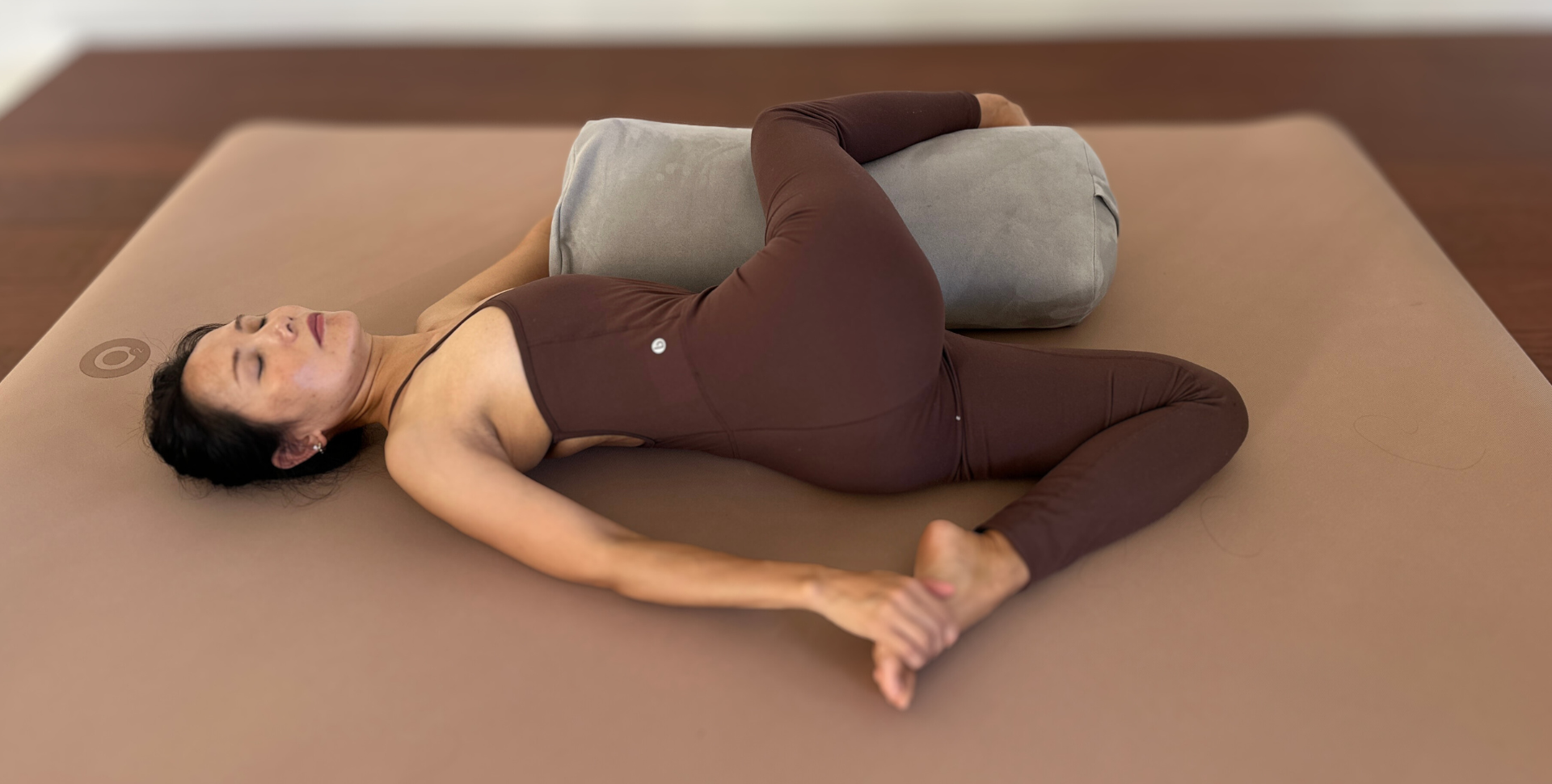
Cat Pulling Its Tail is one of the most recognisable poses in Yin Yoga. It combines a deep quadriceps stretch with a spinal twist and can feel incredibly releasing when taught well.
But when we look more closely, we realise something important.
It isn’t just one pose.
It’s a progression of load and rotation, and how we guide students through that progression can make a significant difference to their experience.
In Yin Yoga, the goal isn’t the deepest expression of a shape.
The goal is appropriate stress for the individual body.
Why Progressive Variations Matter in Yin Yoga
In many yoga classes, poses are taught as a single shape. Students either “do the pose” or they modify it.
But a more skillful approach is to offer progressions.
Progressions allow teachers to adjust:
-
Rotational load on the spine
-
Leverage through the quadriceps and hip flexors
-
Overall intensity of the pose
When students can choose between variations, they can find a level of stress/stretch that feels both effective and sustainable.
This is one of the keys to teaching Yin Yoga safely and intelligently.
Stage 1: Reclined Tara – An Accessible Quad Stretch
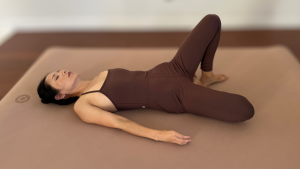
Reclined Tara is a beautiful entry point into the Cat Pulling Its Tail family.
In this variation, the spine remains relatively neutral and the primary focus is on the quadriceps.
Benefits of this variation include:
-
Minimal spinal rotation
-
Reduced load through the lumbar spine
-
Accessible for many bodies
-
A grounding introduction to quad stretching
For many students, this variation may already provide plenty of sensation.
And in Yin Yoga, more sensation is not necessarily better.
Stage 2: Supported Cat Pulling Its Tail – Introducing Gentle Rotation
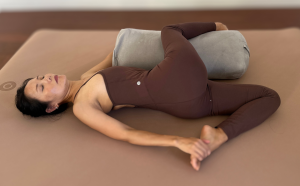
The next stage introduces a twist, while maintaining support.
In this variation, the practitioner lies on their side with a bolster or block placed under the top knee.
This support does several important things:
-
Reduces excessive torque through the lower back
-
Provides stability for the pelvis
-
Allows the nervous system to soften into the shape
This version is often the sweet spot for many students — offering both the quad stretch and spinal rotation without overwhelming the body.
Stage 3: Full Cat Pulling Its Tail – A Deeper Spiral
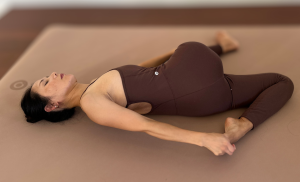
In the full variation, the body rotates more deeply.
The pose may be practised with or without a bolster, and some practitioners may choose to extend the top leg, increasing the lever length and intensity of the stretch.
This variation increases:
-
Thoracic spinal rotation
-
Quadriceps loading
-
Overall intensity of the posture
For some bodies, this feels spacious and freeing.
For others, it may feel compressive or destabilising.
This is why offering progressive variations is so valuable.
Same Pose, Different Load
When we stop thinking of poses as beginner or advanced, and instead think in terms of load and adaptation, our teaching becomes much clearer.
Progressions allow students to:
-
Explore safely
-
Build confidence
-
Honour structural differences
-
Regulate intensity
Teaching Yin Yoga is less about demonstrating depth, and more about understanding how stress is applied to the body.
Learning to Teach Yin Yoga with Confidence
After more than 16 years of teaching yoga and many years working with private clients, I’ve found that understanding pose progressions and load management is one of the biggest shifts that helps teachers gain confidence.
When you understand why a variation works, you can teach with much more clarity and ease.
This is something we explore deeply in my Yoga Alliance certified Mindfully Yin Yoga Teacher Training this May .
Together we look at:
-
Functional Yin Yoga principles
-
Progressive pose variations
- Nervous system regulation
-
The energetics and meridians (TCM)
-
Mindfulness meditation
The training is designed to help teachers move beyond memorising poses and instead develop discernment and confidence in their teaching.
If you’re feeling called to deepen your understanding of Yin Yoga and learn how to teach with more clarity and confidence, I’d love to support you.
Click here to learn more or send me an email — I’m always happy to chat.
About the author
Fiona has been teaching yoga for over 16 years. As a dedicated yoga teacher and educator, her mission is to help yogis stay connected to their yin energy, so they can be mindful in each and every moment. Read more about Fiona here
< Back