

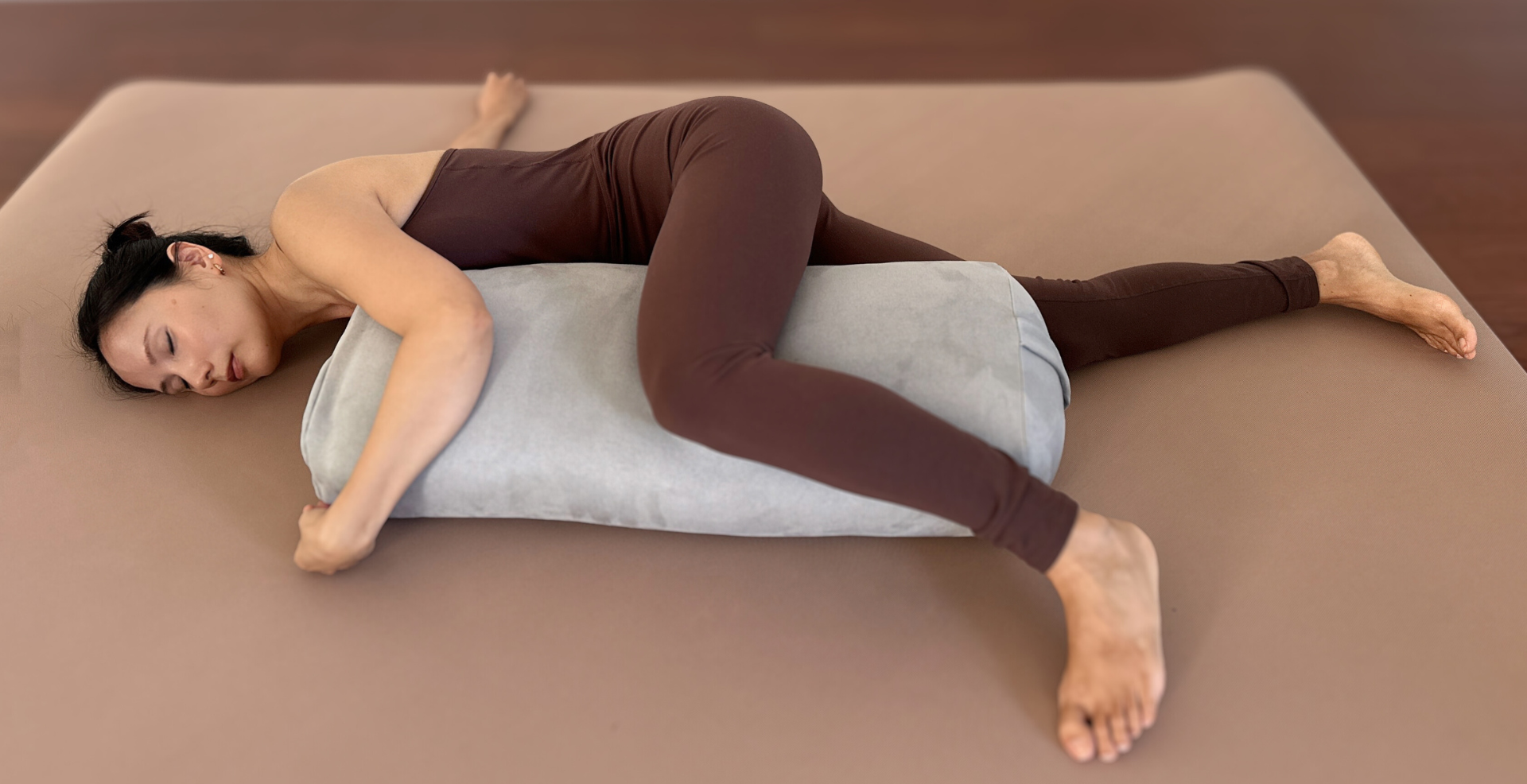
Working Safely with Tight Hips, Shoulders and Spine in Yin Yoga
Open Wing is often taught as one pose — but in reality, it’s a spectrum.
In Yin Yoga, the goal isn’t to achieve the “full expression.” It’s to meet the body where it is and create appropriate stress (stretch and gentle acupressure) without force. Especially when working with tight bodies, intelligent modifications and thoughtful sequencing make all the difference.
If you’ve ever wondered how to modify Open Wing in Yin Yoga, here are three progressive stages that make the pose accessible, spacious and sustainable.
Stage 1: Flapping Fish (Beginner-Friendly Option)
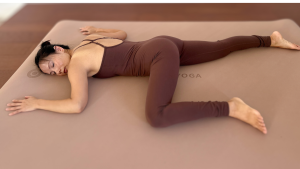
For tight hips and limited spinal mobility, start here.
From Flapping Fish, you introduce gentle rotation and chest opening without demanding too much from the lower back or shoulders.
Benefits of this stage:
-
Gentle spinal rotation
-
Chest and front shoulder opening
-
Inner arm stretch
-
A sense of softening and grounding
This stage already delivers meaningful stimulus without overwhelming the body.
Stage 2: Bolster Under the Bent Knee (Supported Rotation)
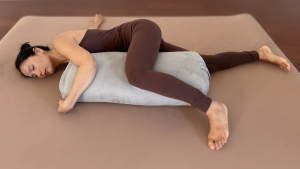
Adding a bolster under the bent knee changes the shape significantly.
This prop:
-
Encourages safer thoracic rotation
-
Creates more space across the chest
- Reduces compression in the lower back
-
Allows the nervous system to relax
For many students, this is the most effective and sustainable version of Open Wing.
If you teach Yin Yoga, this variation is essential for mixed-level classes.
Stage 3: Open Wing (“Full Expression”)
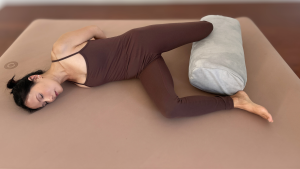
The full expression — with the upper leg behind — requires substantial mobility in:
-
Thoracic spine
-
Hip flexors
-
Chest
-
Front shoulder
This variation is best suited to bodies with high shoulder and spinal mobility
The most important question isn’t:
“How far can I go?”
It’s:
“Can I breathe here?”
Full expression doesn’t mean more advanced. It simply means your body structure allows this degree of opening.
Why Modifications Matter in Yin Yoga
When teaching Yin Yoga to tight bodies, progression and scaling are critical.
Intelligent modification encourages support, comfort and long-term resilience.
Understanding how to modify poses like Open Wing allows you to:
-
Teach mixed-level classes confidently
-
Reduce injury risk
-
Improve student experience
-
Create sustainable long-term mobility
Learn to Teach Yin Yoga with Confidence
In my 100-hour Mindfully Yin Yoga Teacher Training (Yoga Alliance–certified ) , we explore:
-
Functional anatomy for tight and hypermobile bodies
-
Intelligent prop use in Yin Yoga
-
How to teach clear progressions
-
How to build confidence in cueing and modifications
- How to deepen your teaching through the lens of Traditional Chinese Medicine and mindfulness
If you’re feeling called to deepen your understanding of Yin Yoga and learn how to teach with more clarity and confidence, I’d love to support you.
The Yin Yoga Teacher Training begins this May in Auckland.
Click here to learn more or send me an email — I’m always happy to chat.
About the author
Fiona has been teaching yoga for over 16 years. As a dedicated yoga teacher and educator, her mission is to help yogis stay connected to their yin energy, so they can be mindful in each and every moment. Read more about Fiona here
< Back